Green Copper Pipes at Your Tankless: Flux or Corrosion?
Seeing green on copper pipes near your tankless heater? Learn when it’s just leftover flux, when it’s real corrosion, and how to tell the difference.
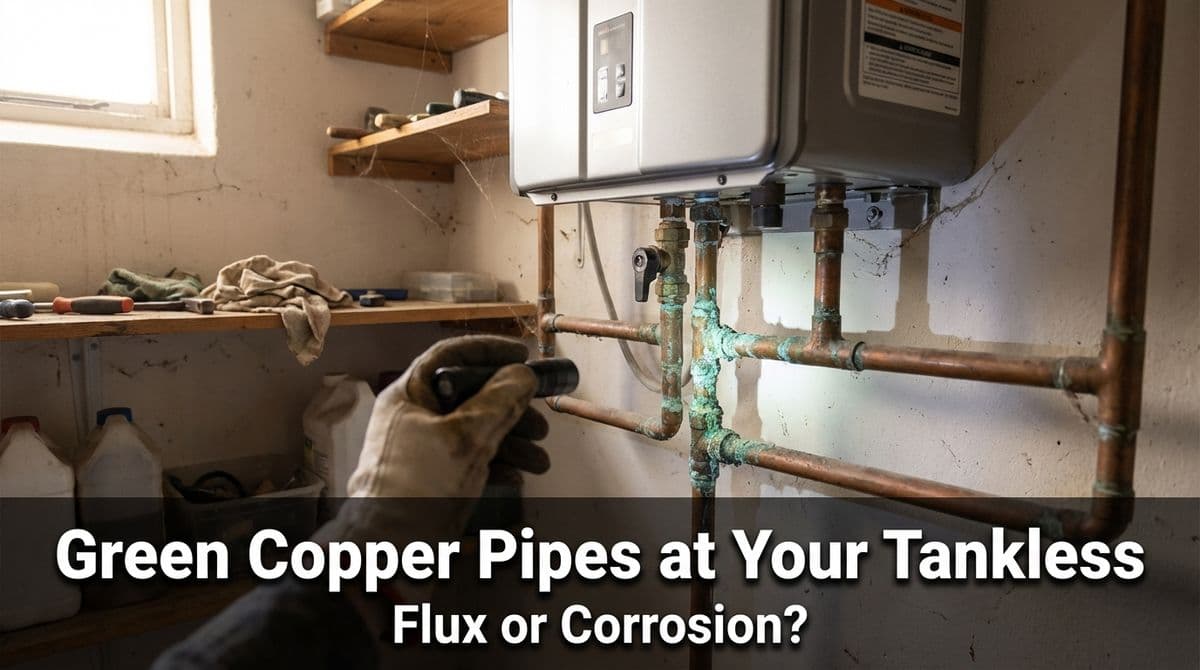
“My Tankless Has Green Pipes — Is That Bad?”
We recently got a call from a homeowner — let’s call him Mark — who sounded a little nervous. We’d installed a pedestal sink for his family a few weeks earlier, and now he’d noticed something else in the mechanical closet: green discoloration on the copper pipes around his tankless water heater.
Mark told us another company had looked at the setup before they moved in but hadn’t done any work. “There’s just some greenish piping,” he said. “We haven’t had anybody really check it out yet. I’m worried there might be issues.”
We hear this concern a lot. Green on copper near a water heater can look scary if you don’t know what you’re looking at. So we walked Mark through what it might be and asked him to email photos first, so we could tell whether it was serious corrosion or just leftover flux from when the pipes were soldered.
Why Copper Pipes Turn Green Around a Tankless Heater
When homeowners call us about “green pipes,” they’re usually seeing one of two things:
- Oxidation or corrosion from moisture, minor leaks, or chemical reactions
- Leftover soldering flux that was never properly wiped off after an installation or repair
Both can look similar at a glance — that bluish-green, crusty or stained look on the copper — but they mean very different things for your plumbing system.
With Mark, we explained that tankless water heaters often have a lot of tight copper connections: cold in, hot out, gas line (if it’s gas), and sometimes isolation valves. Any time a plumber solders those joints, they use flux to help the solder flow and bond. If that flux isn’t cleaned off, it can leave behind greenish staining later on, especially if there’s a little condensation in the area.
Leftover Flux vs. Real Corrosion: How We Tell the Difference
On the phone, Mark joked that he was hoping we’d just “glance at it and say, yeah that’s fine, don’t worry about it.” We told him we’re always honest about what we see, and we started with some questions we typically ask every homeowner in this situation.
Signs It Might Just Be Leftover Flux
When we look at photos or inspect pipes in person, here’s what often points to harmless leftover flux:
- Even staining right at the solder joints, but no buildup or crusting farther away on the pipe
- No active moisture: the area feels dry, no beads of water, no damp insulation or wallboard
- No green or white “fuzz” that flakes off easily when brushed
- No performance symptoms: good water pressure, no odd smells, no signs of leaks below
In those cases, what we’re usually seeing is flux residue that slowly oxidized where it sat on the copper. It may look ugly, but it isn’t necessarily eating through your pipe.
Signs It’s Real Corrosion You Shouldn’t Ignore
On the other hand, we get concerned when we see:
- Green or bluish crusty buildup that’s raised off the surface, not just a stain
- White, powdery deposits around fittings or valves (a sign of mineral-laden water drying after tiny leaks)
- Obvious moisture or tiny “pinhole” leaks that leave a constant drip or damp spot
- Discoloration spreading beyond the joint and running down the pipe
- Corrosion at multiple spots near the tankless, especially where hot and cold lines meet other metals
Those signs often mean there’s been slow leaking or ongoing chemical reaction at the pipe for some time. Even if the leak is so small you barely see it, it can eventually weaken the copper and lead to a sudden failure.
When to Worry About Green Copper Around Your Tankless
Here’s how we usually break it down for homeowners like Mark:
- Don’t panic, but do pay attention anytime you see green or white buildup, especially near joints.
- It’s time to worry if you see active dripping, dampness, or if the green area looks thick, crusty, or is expanding.
- It’s probably cosmetic if it’s a light ring of green right at a solder joint that’s bone-dry and hasn’t changed in years.
We also ask about any changes in the home’s plumbing:
- Has water pressure dropped?
- Any new stains on walls or ceilings below the heater?
- Any musty smells or unexplained higher water bills?
If the answer to any of those is “yes,” we treat the situation as an active leak or developing problem until we can confirm otherwise.
What We Do When We Inspect Green Copper Pipes
With Mark, we asked him to email photos of the tankless piping so we could get a first look before sending a tech out. That’s often our first step: a quick picture can tell us if this looks like simple cleanup work or if we need to schedule a repair visit.
On a typical in-person inspection, here’s what we do around a tankless water heater:
- Visually inspect every copper joint, valve, and connection for signs of leakage or heavy corrosion
- Check for moisture using a dry cloth and sometimes a moisture meter on nearby materials
- Clean a small area of the green buildup to see if it’s just surface staining (flux) or deeper pitting of the pipe
- Verify water pressure and look for other signs of trouble in the plumbing system
If it’s just flux residue, we’ll explain that to the homeowner, clean it up if needed, and recommend keeping an eye on it. If we find active corrosion or a leak, we’ll talk through options to repair or replace the affected sections of pipe before it becomes a bigger issue.
How Homeowners Can Keep an Eye on Things
You don’t have to be a plumber to spot early warning signs. Here are a few simple checks you can do around your own tankless water heater:
- Look closely at each copper joint once or twice a year; snap a quick photo so you can compare over time.
- Run your hand near (not on) the joints to feel for any cool, damp spots after the heater has been running.
- Check below the heater for any staining, puddles, or rust on the drip pan (if you have one).
- Listen for hissing or unusual sounds when hot water is running that might indicate a small leak.
If you’re ever unsure, do what Mark did: reach out and let us take a look. A couple of good photos and a quick visit can give you peace of mind and catch real problems early.
Noticed Green on Your Copper Pipes? We Can Help.
Green corrosion on copper pipes around a tankless water heater doesn’t always mean disaster. Sometimes it’s just leftover flux from an old installation that was never wiped off. Other times, it’s an early warning sign that the pipe is slowly leaking or breaking down.
If you’re staring at green pipes and wondering which one you’ve got, we’re happy to help you figure it out. We can start with photos, then stop by at the beginning or end of the day for a quick inspection — the same way we planned it with Mark. That way you’re not guessing about your home’s plumbing, and you’ll know for sure whether it’s something to watch or something to fix.